
Purchase links
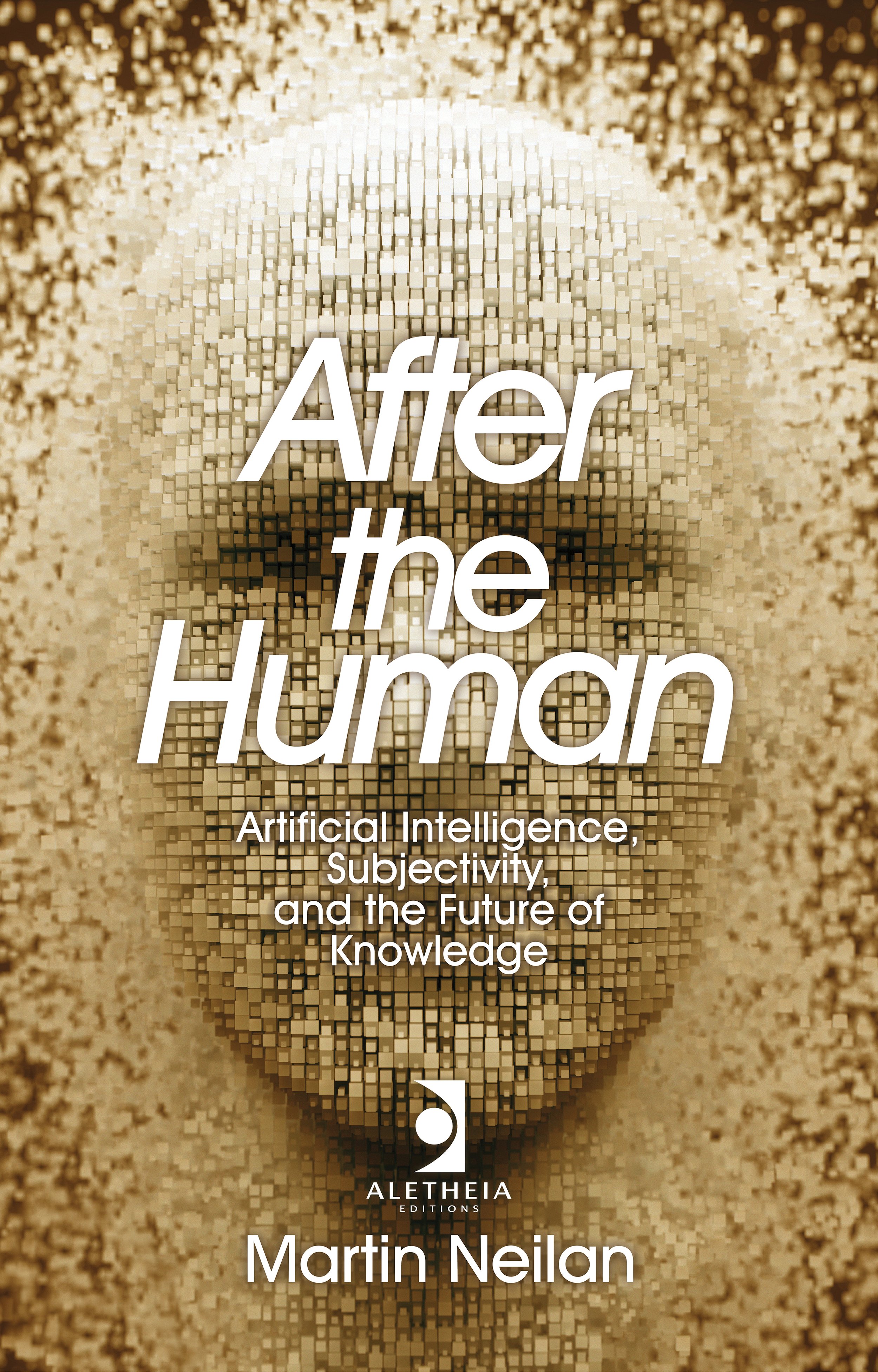
Artificial Intelligence, Subjectivity, and the Future of Knowledge
After the Human


BUY FROM YOUR COUNTRY…
NOT ALL COUNTRIES WITH AVAILABLITY ARE SHOWN HERE.
IF YOU ARE UNABLE TO LOCATE STOCK IN YOUR REGION, CONTACT ALETHEIA EDITIONS VIA OUR “CONTACT” PROFORMA ON THIS WEBSITE AND WE WILL ENDEAVOUR TO ASSIST. ALTERNATIVELY, ORDER FROM YOUR NEAREST REGION WITH AVAILABILITY.




















We built AI to process human knowledge, but did we anticipate that it would dismantle the human who does the knowing?
This book examines how artificial intelligence is displacing the human as what Michel Foucault called the "empirico-transcendental doublet," describing the paradoxical figure who is simultaneously the subject who knows and the object to be known. For two centuries, this unstable structure anchored modern thought. AI is mechanising it, exhausting it, and ultimately displacing it entirely.
The manuscript moves from diagnosis through critique to constructive proposal. The final section introduces "public transcendentalities," outlining democratically governed epistemic infrastructures that could provide alternatives to corporate AI systems while preserving space for "the power of the negative" (refusal, friction, inefficiency, and the right to remain illegible).
Throughout, the book maintains dual commitments: to philosophical rigour grounded in Foucault, Kant, and contemporary continental thought, and to accessibility for readers without specialised philosophical training. Technical concepts from machine learning are explained clearly; abstract arguments are grounded in concrete examples; theoretical chapters are balanced with applied analysis.
Publisher Note: To ensure the highest standards of clarity, readability, and structural flow, the author utilized AI-assisted tools during the final copy-editing and proofreading stages of manuscript production.