Where Ideas Meet the Making of the Self.
philosophy history architecture social sciences
philosophy history architecture social sciences
current FEATURE title
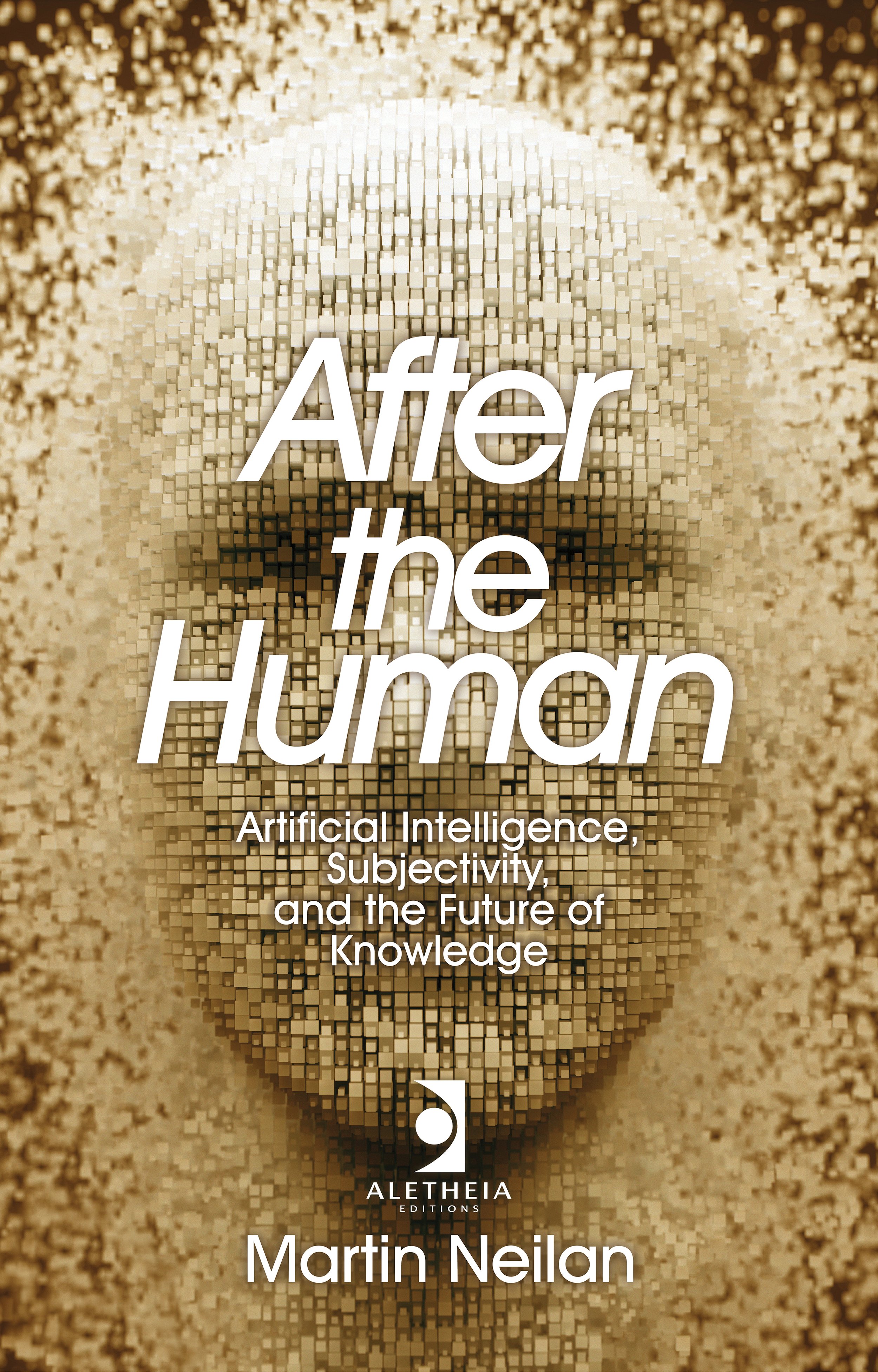
Artificial Intelligence, Subjectivity,
and the Future of Knowledge
After the human
Non-Fiction
We built AI to process human knowledge, but did we anticipate that it would dismantle the human who does the knowing?
For two centuries, the human being has occupied a peculiar and unstable position at the centre of knowledge: simultaneously the subject who knows and the object to be known. Philosophers from Kant to Foucault recognised this paradox as the defining structure of modern thought, the foundation upon which the human sciences, liberal governance, and our ordinary sense of selfhood were built. After the Human argues that artificial intelligence is not simply extending or augmenting this structure. It is mechanising it to the point of collapse. The human is not being replaced by a smarter machine. It is being dissolved as the philosophical centre of knowledge itself.
The book traces two distinct regimes through which this displacement is already occurring.
The first (the Mirror Regime) describes what platform capitalism has industrialised: recommendation algorithms and social media systems that saturate subjects with their own reflected data, eliminating friction and alterity until preference becomes indistinguishable from prescription. This is Lacan's mirror stage mechanised — a perpetual narcissistic loop that culminates, technically, in model collapse, the moment AI begins training on AI-generated content and the human signal degrades entirely.
The second (the Node Regime) points toward a more radical horizon: humans repositioned not as subjects at the centre of meaning-making, but as elements in networks governed by logics that do not centre human experience at all. What the book calls "alien reason," or systems that produce consequential knowledge through processes we can verify but not comprehend, externalises the very function Kant identified as constitutive of subjectivity itself.
After the Human moves from this diagnosis toward a constructive response. Rather than calling generically for ethical AI or algorithmic accountability, the book proposes "public transcendentalities," outlining democratically governed epistemic infrastructures that treat search engines, recommendation systems, and language models as collective utilities requiring democratic oversight. Drawing on Foucault, Kant, and Lacan whilst remaining accessible to readers without specialist philosophical training, the book offers a framework that is neither techno-optimism nor moral panic, but a philosophical archaeology of the present moment — and a serious attempt to think through what comes next.
Publisher Note: To ensure the highest standards of clarity, readability, and structural flow, the author utilized AI-assisted tools during the final copy-editing and proofreading stages of manuscript production.
upcoming titles